

Paprika Seed - Through a Dietitian’s Eyes
We recommend plant oils precisely because, besides their dissolved substances and vitamin content offering health benefits, their characteristic fatty acids also have anti-inflammatory effects—so, if we had to label them: they’re healthy.
FATTY ACID COMPOSITION
Although they are not free from saturated fatty acids typical of the animal kingdom (and they don’t need to be!), (paprika seed oil contains about 14 g/100 g), unsaturated fatty acids dominate (paprika seed oil has about 9 g/100 g of monounsaturated fatty acids, e.g., oleic acid – omega-9), and even more beneficial are the polyunsaturated fatty acids (paprika seed oil contains about 77 g/100 g).
Paprika seed oil is rich in linoleic acid, an essential (vital) omega-6 fatty acid.
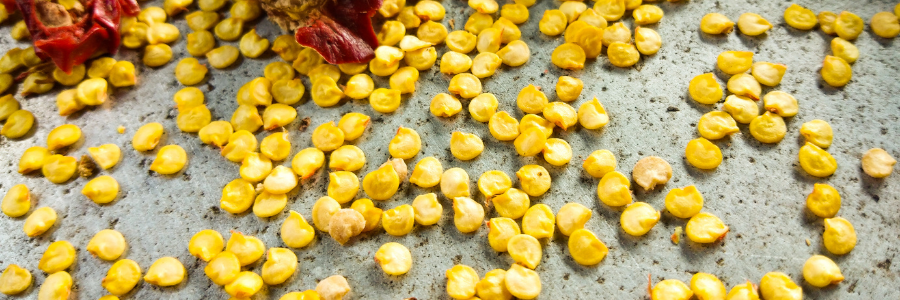
Among its antioxidants and health-promoting plant compounds, the carotenoids from the xanthophyll group stand out, such as lutein and zeaxanthin. This group also includes capsanthin and capsorubin. The latter two are used by the food industry as natural colorants (E160) — which means “approved in Europe,” not “definitely harmful.” :-D Both are fat-soluble compounds, so when dissolved in oil, they turn beautifully bright red (the name of the ruby gemstone actually comes from this).
The zeaxanthin and lutein in paprika seed oil are especially important in summer because these pigments not only please the eye but also protect our eyes from ultraviolet radiation. That’s why it’s worth drizzling about a teaspoon of sweet or spicy paprika seed oil over your summer pumpkin stew.
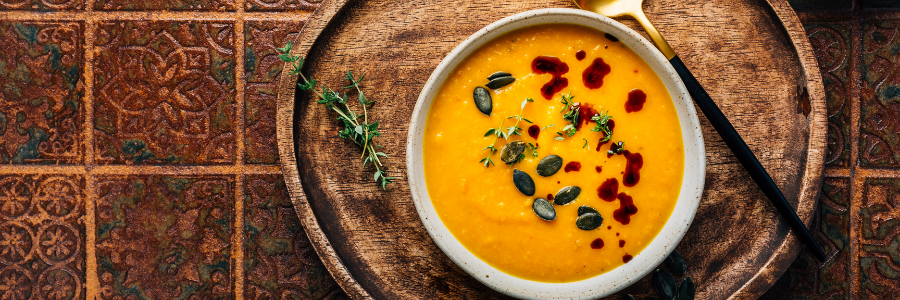
The more beautiful and colorful a dish looks, the better the digestive system prepares itself (due to the nervous system’s effect, saliva glands activate and stomach acid production increases) to receive the food, making the nutrients easier to digest.
That’s why it’s nonsense to say that healthy food can’t be tasty or beautiful — only what’s a good experience to eat can truly be healthy!
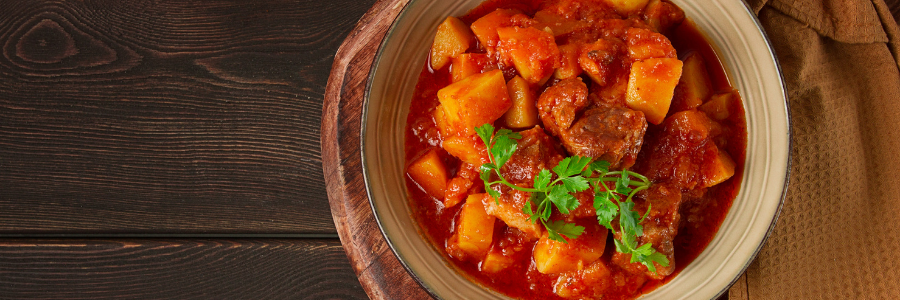
Hungarian dishes often get criticized as unhealthy. But let’s look at what “Hungarian-style” really means, for example, in the case of pörkölt (a Hungarian stew):
- The meat is roasted — this process deserves its own story, but there’s nothing wrong with it.
- Onions? They are an incredible vegetable for supporting gut flora; we should eat more of them!
- Paprika? It’s a dried, roasted vegetable, also packed with antioxidants — yes, we should be eating more of that too.
Spicy! Can you handle it?
The spicy compound called capsaicin is found only in hot peppers. Although it causes increased blood flow, it is not a weight-loss agent! And it’s also not true that it causes stomach problems.
Capsaicin, while irritating to mucous membranes, doesn’t cause damage on healthy tissue despite the redness and burning sensation it triggers.
There’s even a scientific explanation for why people love spicy food. When you feel pain, the body automatically activates its pain-relief mechanisms, which overall create a pleasant sensation. People also adapt to the spicy taste — those who can handle it tend to tolerate and even crave it more over time.
It’s important to know that spicy foods are not harmful! Increased saliva production and digestive enzyme secretion can be triggered by many other flavors and spices as well; it’s just that this isn’t widely recognized.
Capsaicin has proven health benefits, including anti-inflammatory effects, though the scientific community still debates some aspects. However, no negative effects have been proven, so dietitians recommend that if you enjoy and tolerate spicy foods, and your digestive tract is healthy (no IBD, IBS, ulcers), you can safely enjoy them!

The vitamin E content of paprika seed oil (77 mg) is outstanding — just one tablespoon covers nearly half of the daily requirement. Vitamin E is a powerful antioxidant (free radical scavenger) and plays a key role in the prevention of cardiovascular diseases.
The “sweet” version of paprika seed oil is usually not spicy, so — after a small test — it can be safely given to children, almost like a multivitamin. Even kids who are not fans of paprika might accept the oil, giving them access to the beneficial compounds without dealing with the texture or skin of the vegetable.
LISTEN IN!
The PAPRIKA SEED PODCAST is now available on our YouTube channel! English subtitles will be added soon.
