Pumpkin Seed - Through a Dietitian’s Eyes
Pumpkin seeds are easily one of the most underrated oilseeds in our region — and quite unfairly so. Why don’t they get the attention they deserve? Let’s dive into the details!
OILSEEDS IN THE KITCHEN
Sunflower seeds are often eaten by adults, walnuts and poppy seeds appear in many of our desserts, salted roasted peanuts are widely loved, almonds and pistachios are among the most popular snacks, hazelnuts are common in chocolates, and cashews are a big favorite among vegans. Pumpkin seeds, on the other hand, are rarely seen—maybe a few sprinkled on scones or bread—but mostly we consume their oil.
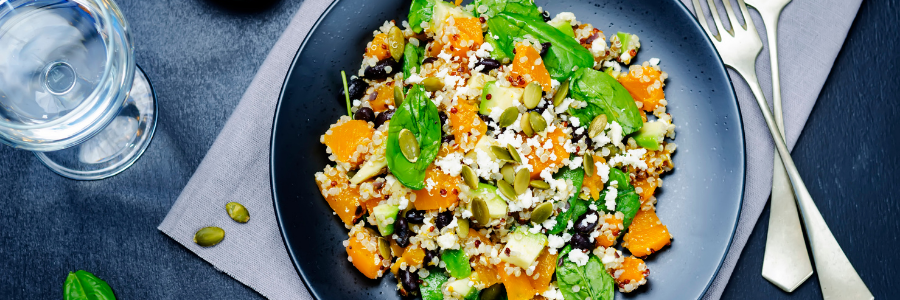
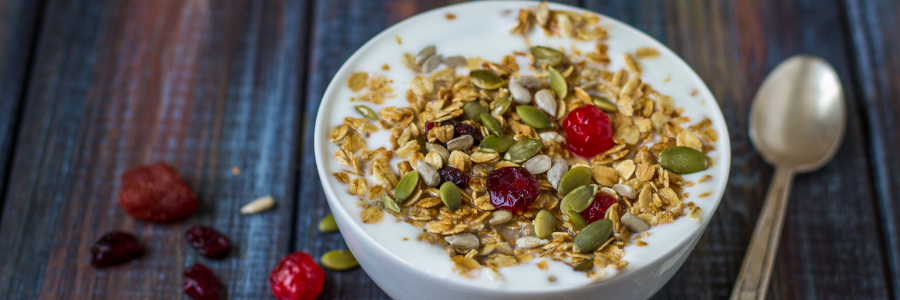
Yet they’re not only great for savory dishes, but pair beautifully with sweet ones too. They’re excellent, for example, combined with dark chocolate as a snack, or generously added to granola. It’s worth always keeping some at home and tossing a spoonful—lightly dry-roasted—on top of salads or roasted vegetables.
It's hard to talk convincingly about taste, so let’s look at pumpkin seeds from a dietetic perspective!
Nutritional content of pumpkin seeds
- Source of energy
Like most oilseeds, they are high in energy — almost identical to cashews — around 570 kcal per 100 g, due to their high fatty acid and significant protein content. Seeds are very nutrient-dense, so although daily consumption is recommended, it’s best to limit intake to 1–2 times per day, around one loosely cupped handful (approx. 20 g), which equals about 120 kcal.
Even the divinely tasty greenish-reddish pumpkin seed oil should be consumed mindfully:
100 ml contains 900 kcal, and just 1 tablespoon is about 100 kcal, so pour with care!
ITS PLANT-BASED PROTEIN CONTENT IS OUTSTANDING
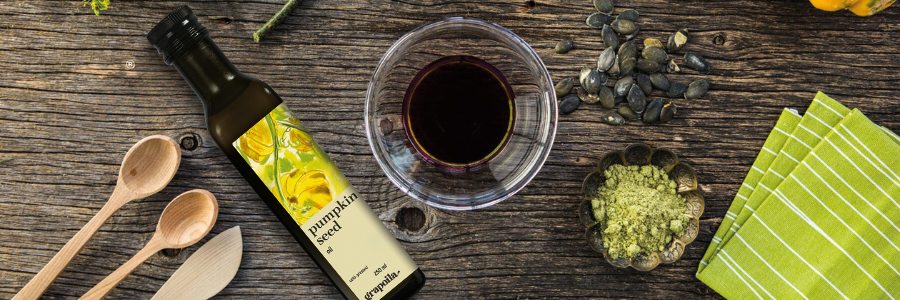
Among oilseeds, pumpkin seeds have the highest protein content: about one-third of these small seeds is protein. And now, hold on tight — the pumpkin seed flour made from the dry residue left over after producing Grapoila’s pumpkin seed oil (which is low in fat) has a protein content of 60%, while its energy content is only 352 kcal.
Pumpkin seed flour is one of the most sought-after plant-based protein sources among vegans.
FAT COMPOSITION IS OPTIMAL
Pumpkin seeds and pumpkin seed cream contain about 50% fat, the oil is 100% fat, and pumpkin seed flour has only around 7% fat. From a nutritional physiology standpoint, it’s optimal that the saturated fat content is only 9 g/100 g, while the especially health-promoting unsaturated fat content is high:
- monounsaturated: 16 g/100 g
- polyunsaturated: 21 g/100 g
Pumpkin seeds have a firm place in a health-conscious diet, partly due to these strongly anti-inflammatory fatty acids.
Carbohydrate content is favorable
Its carbohydrate content is very low (~5–10 g/100 g), and thanks to the significant protein, fatty acid, and fiber content, it is absorbed very slowly. This is beneficial both for blood sugar metabolism and appetite control. It’s also rich in complex carbohydrates, i.e., fibers (6.5 g/100 g), which contribute to health maintenance and support digestive system function.
Rich in micronutrients
You often find lists online detailing everything contained in a given raw ingredient, along with many wonderful claimed effects. However, just listing what’s present doesn’t necessarily mean you’ll experience the expected benefits.
To evaluate the quality of a nutrient source, it’s important to know realistic consumption amounts and daily recommended doses (the latter are shown in parentheses below).
Pumpkin seeds are an excellent source of the following micronutrients:
- Magnesium ~592 mg/100 g (~300 mg recommended daily intake)
- Potassium ~810 mg/100 g (~2000 mg)
- Copper ~1.34 mg (~1.5 mg)
- Manganese ~4.5 mg/100 g (~2 mg)
- Iron 12 mg/100 g (men ~8 mg, women ~18 mg)
Also found in pumpkin seeds:
- Zinc ~8 mg/100 g (~40 mg)
- Selenium ~9.4 µg/100 g (~50 µg)
- Folate ~58 µg/100 g (~400 µg)
- Calcium ~55 mg/100 g (~1000 mg)
Beyond all this, pumpkin seeds also contain antioxidant plant compounds and bioactive substances (among hundreds: for example, cucurbitacin, tocopherol, etc.), which have positive physiological effects.
They may reduce:
- the risk of microbial infections
- oxidative stress
- the development of hyperglycemia
- the occurrence of diabetes complications
- prostate disorders (e.g., tumors, benign prostatic hyperplasia)
- the severity of urinary tract diseases
- the development of colon and lung cancer
- the rate of breast cancer progression
- cholesterol levels (due to their plant sterol content).
At the same time, they:
- support liver function
- aid wound healing
- stimulate hair growth
- are linked to improved spermatogenesis
- have anti-ulcer effects.
Pumpkin seeds can also be considered a local superfood!
It’s a myth that they cause acne, and if we want to fully enjoy their positive effects beyond just the taste, we should stick to the recommended consumption amount, avoid using added oil when roasting, and snack on them natural, unsalted, and unroasted!