

Sunflower Seed - Through a Dietitian’s Eyes
Did you know that oil was originally used for industrial purposes – e.g. paint and soap production?
CONVERSATION FROM THE CLINIC...
Do you usually eat oily seeds?
– Well... rarely.
– And what kind do you eat?
– Mostly pistachios, cashews, and well, salted peanuts or sunflower seeds.
This is more or less the general attitude toward oily seeds among adults in Hungary today.
And what about older people? They mostly eat walnuts, but even then, the majority don’t. Because they had gallbladder surgery long ago or some other procedure and so they avoid it (even though there's no need to exclude them long-term for that reason!), it gets stuck in their teeth, or they think it's bloating, or they’re afraid to eat it due to colon diverticula. But unfortunately, all these concerns are based on misinformation.
Sunflower (Helianthus annuus) belongs to the aster family and originates from North America. Oil pressing began in the 1700s, and oil was initially used for industrial purposes (paint, soap production, etc.), and then from the mid-1900s, it became widespread for culinary oil production. Today, sunflower oil ranks 4th among globally used oils.

THE MANY FACES OF SUNFLOWER SEEDS
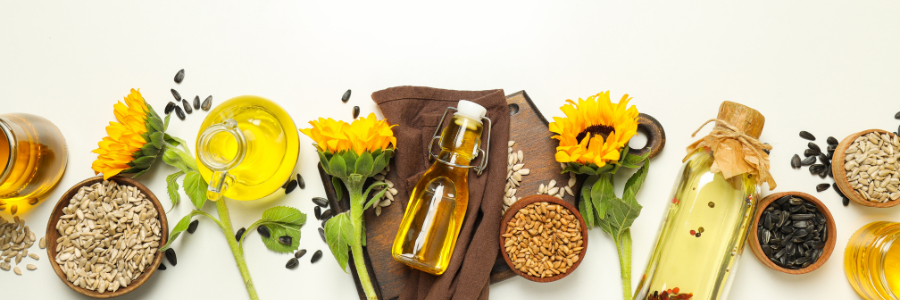
Sunflower seeds are extremely versatile: when sprouted, they can be a salad or sandwich topping, they can be roasted dry or in oil to sprinkle on salads, soups, or stews, and they can be added to both sweet and savory dishes. They can be made into pesto, seed butter, there's even sunflower honey, and of course, the well-known sunflower oil.
On a WFPB (whole food plant-based) diet, the consumption of plant oils is not recommended; only the natural, whole seeds are advised. It's true that the less processed an ingredient is, the more intact its nutritional value, and the richer it remains in micro- and macronutrients.
WHEN IT COMES TO OIL PRODUCTION, WE NEED TO DISPEL A FEW MYTHS!
Cold-pressed oils – pressed without heat – are a highly valuable source of nutrients thanks to the gentle technology used (they contain fatty acids, antioxidants, minerals, vitamins).
Styrian or warm pressing begins with low-temperature roasting (to increase yield and achieve a more distinctive flavor), followed by mechanical pressing to extract the oil content from the seeds, and this too is considered a relatively gentle method.
However, during extraction methods, the nutritional content of the raw material does change significantly, and it’s a fact that large-scale industrial production will never be as healthy or sustainable as, for example, cold pressing combined with zero-waste technology at Grapoila. In industrial refined oil production, organic solvents (mostly hexane) are used to extract the maximum amount of oil from the seeds. This harmful substance is of course removed from the oil at the end of the process (since hexane has a lower boiling point than oil, it can be easily extracted). Refined plant oils are also filtered, meaning they lack valuable, health-promoting dissolved compounds like antioxidants and other phytonutrients – but that’s exactly what allows them to withstand long heating (like deep frying) without forming carcinogenic compounds.
So, while we definitely do not recommend industrial oils, we do happily promote oils in general. Why? Because they allow us to bring numerous valuable nutrients into our diet. And indeed, that unique, rich flavor and the variety of uses are part of healthy eating. The healthiest meal is one that’s a joy to prepare and a pleasure to eat. Oils help make this happen. Let’s drizzle a spoonful of oil on hummus made with sunflower seed tahini, let a bit of oil gleam on top of a veggie cream soup, and make herb-infused oils to enrich simple mashed potatoes, oven-baked potatoes, or even a savory breakfast porridge.
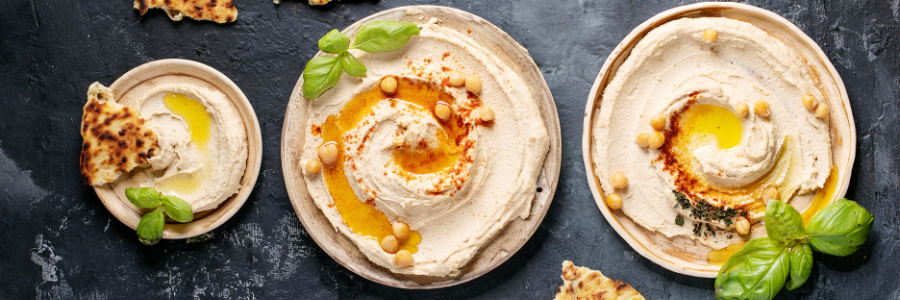
Not to mention that for many people, in certain situations (e.g. inflammatory bowel disease), excessive fiber intake can cause bloating. However, with unrefined plant oils, you can introduce the valuable fatty acids and micronutrients found in seeds without the fiber load.
If I could, just like doctors write prescriptions for blood pressure meds, I’d prescribe 1–2 tablespoons of oily seeds daily as a dietitian! And since we’re on the topic of high blood pressure: when we recommend seeds, we mean unsalted ones only, because no matter how heart-protective a seed is, the salt content in heavily salted seeds is just as unhealthy. In the long run, more salt means more water retained in the body, resulting in higher blood volume, which can stretch the blood vessels, and the regular high pressure makes the vessel walls less elastic. In this situation, the heart has to work harder continuously to maintain proper circulation.
LET’S TAKE A LOOK AT THE NUTRITIONAL COMPOSITION OF SUNFLOWER SEEDS!
MACRONUTRIENTS (carbohydrates, protein, fat)
Sunflower seeds are high in protein – 100 g contains almost as much protein (~20 g) as 100 g of chicken breast (~22 g) – however, because they have a much higher fat content (not 1 g but nearly 50 g), they should be consumed in moderation. They’re a significant plant-based protein source and are an important part of the daily diet for both vegans and environmentally conscious individuals reducing meat consumption.
The “high” fat content in sunflower seeds is made up of 80–85% health-protective unsaturated fats (44% monounsaturated, 56% polyunsaturated)!
The main unsaturated fatty acids in sunflower seeds are oleic acid (C18:1, ω-9) and essential linoleic acid (C18:2, ω-6). We’ll dive deeper into the fascinating world of these special fatty acids in a future article.
Carbohydrate content is low (~10 g/100 g), so people with diabetes don’t need to count it, since this small amount is absorbed very slowly – provided it’s consumed in moderation (e.g. 1–2 tablespoons on a salad or in cream soup, a handful in afternoon yogurt).
Sunflower seeds are high in complex carbohydrates, i.e. fiber (80%), which helps stabilize blood sugar, protects the circulatory system, and supports healthy bowel movement. Though all oily seeds generally perform well in terms of fiber content.
MICRONUTRIENTS (vitamins, minerals, trace elements, antioxidants)
They’re a significant source of potassium (~650 mg/100 g), which protects the cardiovascular system. They also contain magnesium (325 mg/100 g), which in synthetic form is often taken in Hungary for muscle cramps. Sunflower kernels also contain immune-boosting zinc (5 mg/100 g) and are an excellent source of antioxidant vitamin E. Listing all the antioxidants, vitamins, and minerals in the seeds would turn this into a chemistry lesson, but the polyphenol-rich composition of sunflower seeds lowers the risk of numerous lifestyle diseases.
Important! These valuable phytonutrients in sunflower seeds are most effective when used preventively – meaning, consumed regularly, not just occasionally or only when there’s a health issue. As a dietitian, I always include seeds and oils in the gift packages I prepare for friends and relatives.
FUN FACTS ABOUT SUNFLOWER FLOUR
Today’s world has a (professionally frustrating) tendency to demonize ingredients unnecessarily and replace them with something more expensive that, while trendy, doesn’t really serve our goals (e.g. using almond flour instead of wheat flour during dieting – double the calories and 4x the price, so it “slims” only your wallet, not you).
We gladly recommend sunflower seed flour for several reasons. Not to replace 100% of wheat flour – otherwise everything would taste like sunflower seeds – but because it’s a great thickener, high in protein, and its unique flavor adds variety!
Since this flour is a by-product of oil production, its fat content is automatically lower (~12% instead of ~50%), because the oil is extracted first, and the dry seed residue (called pellet) is ground into flour. It contains almost no carbohydrates (just a little, and slowly absorbed), making it ideal for people with diabetes to slow down the absorption of a dish’s carbs.
Sunflower flour is “flour” only in name – it doesn’t need to be cooked or baked like wheat flour, so it can easily be added to porridge, fruit smoothies, or plain yogurt.
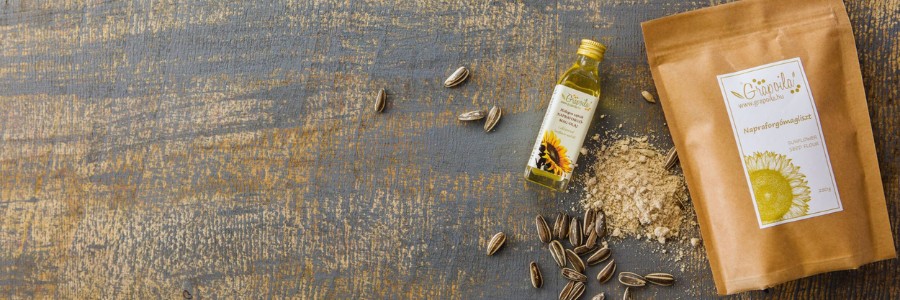
My personal favorite fact about sunflower seeds is how easy they are to prepare and use in the kitchen – soft little seeds that can be processed with a basic household food processor or hand blender, no need for expensive, professional tools, making it an eco-conscious product in this sense too.
One extra summer tip: In people allergic to ragweed, sunflower seeds can sometimes act as an allergen or trigger. However, if you haven’t experienced this issue before as someone with allergies, enjoy them with confidence!
ARE OILY SEEDS EXPENSIVE? IT’S A MATTER OF PERSPECTIVE
A common complaint – or sometimes valid observation – is: “But oily seeds, seed oils, and flours are expensive!”
We think something is only expensive if it’s not worth it! And these premium oils and seeds can become affordable if consumed in moderation.
GOOD TO KNOW!
There’s no such thing as healthy or unhealthy food – those are non-existent categories. If you eat too many sunflower seeds, besides being costly, you’re also overloading on calories. And it doesn’t matter if the excess energy comes from ice cream, seeds, or meat – the surplus energy gets stored as fat, not muscle.
I often mention that the “gluten-free” label on Grapoila products isn’t there for trendiness – it’s because they are truly free from all contamination, which is not just relevant for fashion or mild sensitivities, but a reassuring, vital fact for people with autoimmune celiac disease.
LISTEN IN!
The SUNFLOWER PODCAST is now available on our YouTube channel! English subtitles will be added soon.
