
Walnuts and Poppy Seeds - Through a Dietitian’s Eyes
Walnuts and poppy seeds, the two best-known oilseeds in Hungary, have served as a source of nutrients for centuries. Their popularity is no coincidence.
Weight loss, cancer prevention, treating constipation, living beautifully and healthily to 100…
Even though these are all complex topics, we often want to press the experts (be it doctor, dietitian, naturopath, or Chinese medicine practitioner) until they give us one keyword, one magic word that could easily help us reach our goals.
Nowadays, everyone knows that preserving health and preventing disease depends on our entire social environment, lifestyle, and mental-emotional state. Yet we tend to reduce it all down to “lifestyle” and focus only on exercise and nutrition.
However, if instead of simply focusing on NUTRIENT INTAKE or NUTRITION, we actually practiced EATING, we’d already be connecting to our health in a more complex way.
THE KEY TO HEALTHY EATING:
– as little saturated animal fat, animal protein, and refined carbohydrates as possible
– as much unsaturated, plant-based fat, plant protein, and complex carbohydrates (fiber) as possible.
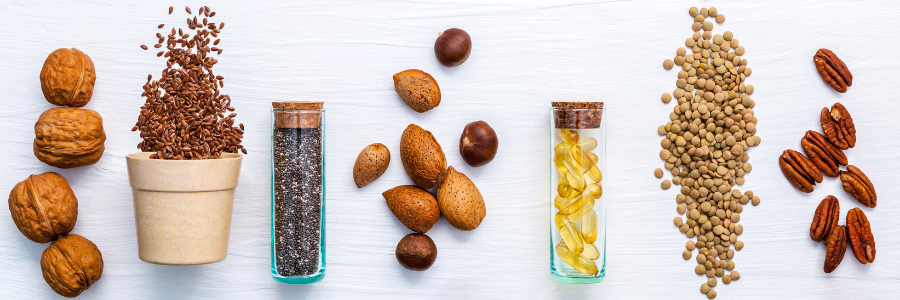
NUTRIENT CONTENT OF WALNUTS AND POPPY SEEDS
Our oilseeds offer exactly that:
– significant plant-based protein sources (walnuts ~15 g/100 g, walnut cream ~26 g/100 g, walnut flour 47 g/100 g, poppy seeds ~18–20 g/100 g, poppy flour ~35 g/100 g)
– outstanding (walnuts ~60%, poppy seeds ~40%) unsaturated fat content (essential omega-6 and omega-3 fatty acids)
– low carbohydrate content (walnuts ~7 g/100 g, poppy seeds ~8 g/100 g), mostly complex, non-absorbable fiber.
The glycemic index and load of both are very low, because the small amount of carbs absorb slowly due to their complexity and the presence of fat and protein.
Even in strict insulin and dietary therapy for diabetes, these can be consumed confidently—without counting the carbs—so long as one serving (loosely closed handful ~20–30 g) is maintained and not 100 g all at once.
Both are also significant sources of micronutrients (vitamins, minerals):
magnesium – supports the nervous system and muscle function (both cardiac and skeletal)
zinc – essential for immune function
vitamin E – antioxidant and anti-inflammatory
potassium – supports neurotransmission and intestinal muscle movement, thus “bloat-reducing”
copper – contributes to connective tissue integrity and skin elasticity
iron – essential for oxygen transport and blood formation.
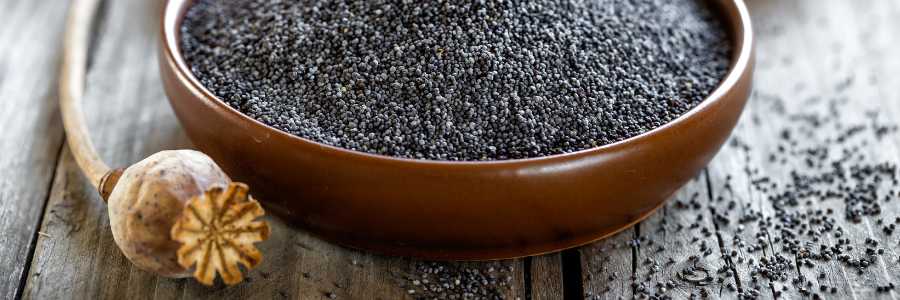
POPPY SEEDS
Poppy seeds are a true Hungarikum—something the Hungarian kitchen can be proud of for both taste and health effects!
They are high in plant-based protein (~18–20 g/100 g—fun fact: similar to chicken breast), and this can be further increased as flour (~35 g/100 g). A big plus in today’s ecological climate.
While poppy seeds do contain a decent amount of carbs (~25 g/100 g), this is mostly (~80%) non-absorbable complex carbohydrates, i.e., fiber—not simple sugars.
This is key for those (typically women, due to anatomical reasons) with constipation or those needing slower carb absorption (e.g., metabolic disorders).
But it’s actually beneficial for everyone, as fiber plays a major role in preventing civilization-related diseases.
Poppy seeds contain nearly 45% plant oil, so they are energy-dense.
They are particularly rich in essential, polyunsaturated omega-6 fatty acids (linoleic acid), which help reduce cholesterol, thus protecting blood vessels.
Their calcium content is exceptional (~1500 mg/100 g – daily need is ~1000 mg), making them the top oilseed in terms of osteoporosis prevention.
However, this effect is only truly effective when ground or in flour form, because whole seeds’ anti-nutrients (fiber, phytic acid) reduce calcium absorption.
Poppy seed oil has a wonderful taste, but contrary to popular belief, it’s not suitable for calcium supplementation—it only contains fat-soluble vitamins and compounds (e.g., vitamin E).

WALNUTS
Walnuts are true superfoods—much more so than trendy cashews or pistachios.
In fact, among oilseeds, they stand out due to their unique and substantial fat composition.
Not only is their omega-6 (linoleic acid) content high, but they also contain omega-3 (alpha-linolenic acid)—an essential fatty acid that is even rarer in nature.
With their mineral, vitamin (especially vitamin E), and antioxidant content, walnuts support the immune system, preserve mental performance, protect the heart and circulatory system, and even help maintain skin health and overall beauty.
Their fatty acids are very prone to oxidation (rancidity), so walnuts should be kept in a cool, dark place—and walnut oil must be refrigerated.
They are not only significant in terms of plant protein (~15 g/100 g, walnut cream ~26 g/100 g), but their omega-3 content makes them a daily essential for both vegans and omnivores.
Their most concentrated forms are:
walnut oil – for fat and vitamin E
walnut flour – for protein and minerals
As a result, their physiological effects link them to the prevention of numerous civilization diseases.*
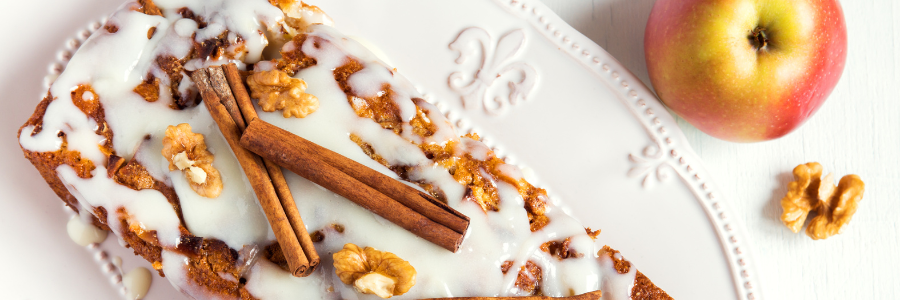
THE KEY TO HEALTHY EATING:
- first of all, eating foods we love (poppy seed noodles, golden dumplings with lots of walnut)
- not demonizing ingredients (“poppy seed bejgli makes you fat”, “walnut cream is too fatty”)
- connecting with nature, which is an instinctive part of us, even if we ignore it (choosing whole walnuts over protein powders)
- connecting with our cultural traditions (poppy seed bread pudding, jam linzer topped with walnuts)
- exploring exciting, new flavors (homemade walnut veggie patties instead of processed store-bought ones, walnut pepper paste)
- being environmentally conscious—which is scientifically proven to benefit mental health—and expressing this through our food choices (using whole poppy seeds instead of chia in oatmeal for crunchy black dots).
LET’S TALK PROTEIN POWDERS!
Few nutrients get as much hype among the health-conscious and the food & fitness industries as protein.
And that’s partly understandable, because:
– proteins are among the most important building blocks of our cells
– about 20% of the human body is protein
– dietary protein (amino acids) is essential for building our own proteins (e.g. muscle) and nitrogen-containing compounds (e.g. hormones)
– and since we don’t have a protein “storage”, in case of deficiency, the body breaks down its own muscles.

For all these reasons, adequate protein intake is crucial, and we dietitians do pay attention to this in special circumstances.
However, most people (thankfully!) do not need protein powders at all.
Nature knows our protein needs, and they’re met easily through meat, fish, dairy, eggs—and yes, plant sources too: whole grains, legumes, and oilseeds.
International professional consensus states that we can meet our protein needs from plant sources at any age.
And that consensus applies to natural food sources—not supplements.
It is healthier, tastier, more varied, and more sustainable to meet protein needs with real food instead of powders!
*The list is not exhaustive: intestinal cancers, breast tumors, cardiovascular diseases, heart attack, atherosclerosis, dementia, depression, inflammatory bowel diseases, diverticulosis, chronic inflammation, diabetes, dysbiosis.
LISTEN IN!
The WALNUT AND POPPY SEED PODCAST is now available on our YouTube channel! English subtitles will be added soon.
